AI forecasts for the entire Polish grid (KSE)
We forecast TGE electricity prices, PV- and wind-farm output and grid load, and benchmark our load forecast against the official PSE forecast. See how our forecasting works.
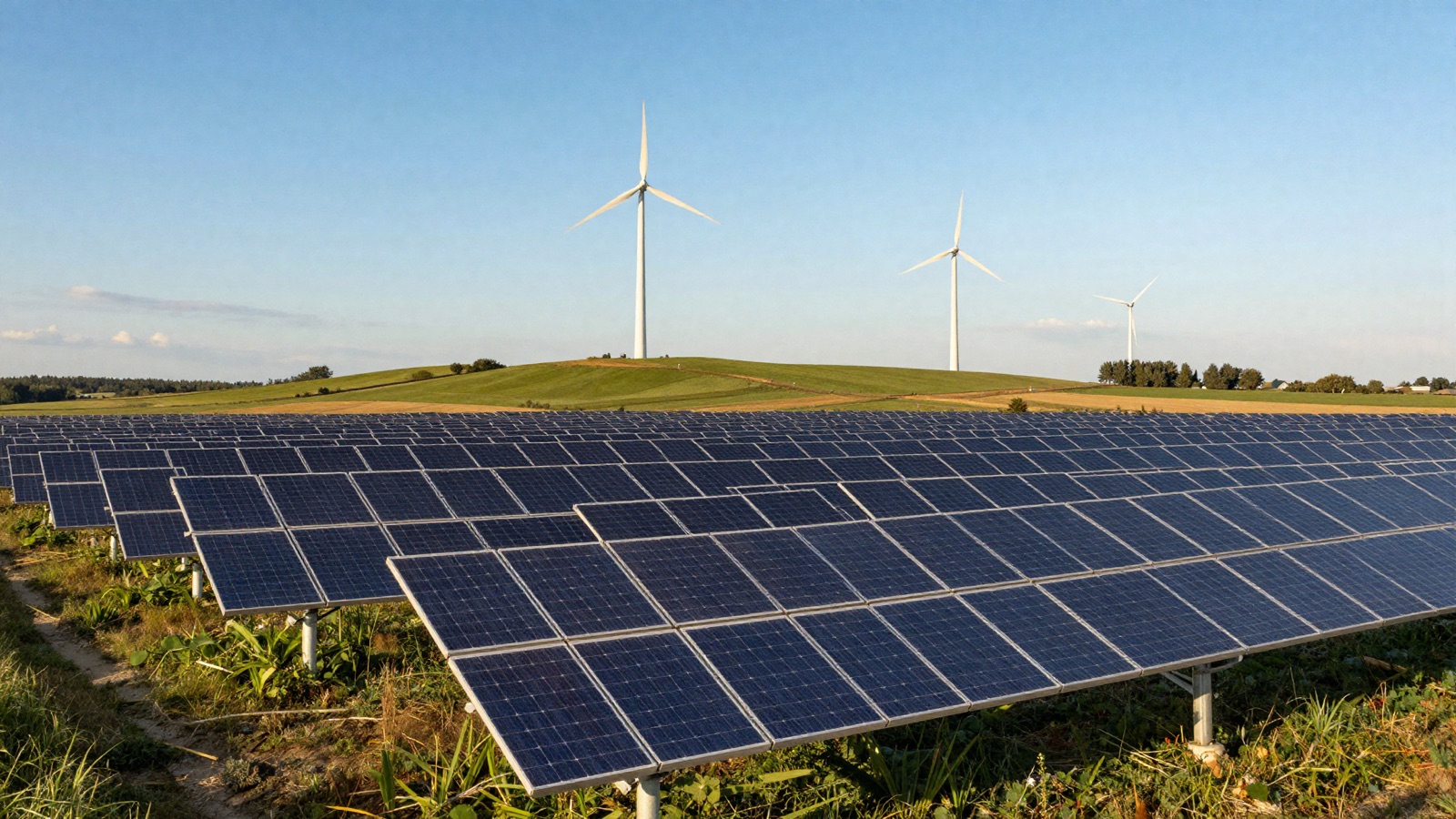
Every day we forecast the key figures of the Polish power system (KSE): TGE energy prices, solar (PV) farm generation, wind farm generation and grid load. The load forecast reaches up to 16 days ahead, and we continuously benchmark it against the official PSE forecast.
Forecasting in the KSE is hard for one simple reason: the system is increasingly weather-dependent. With more than a dozen gigawatts of solar (PV) and wind capacity, energy prices and grid security now hinge on cloud cover, wind and temperature - together with cross-border exchange and consumer behaviour. Our system combines these signals and turns them into concrete, actionable numbers.
TGE energy prices
We forecast the Polish market energy price (RCE), which tracks day-ahead (RDN) prices on the Polish Power Exchange (TGE). This is the foundation of automation: knowing when energy will be cheap and when it will be expensive lets you control an energy storage system, production or purchasing. We recompute the forecast every 4 hours.
We measure accuracy against actual market prices, not against training data. That measurement, not the training score, shows how a forecast holds up on the real market.
Solar (PV) and wind farm generation
We forecast solar generation and wind generation separately - solar from a single installation up to the entire KSE, wind for the KSE as a whole. For grid operators and industrial sites this information feeds network and production planning.
Grid load and the Energy Compass
We forecast KSE grid load, and for the PSE Energy Compass we publish a zone forecast (S1-S4) up to 7 days ahead - showing when the system approaches stress and when it pays to shift consumption. For industrial consumers this is a ready-made signal for scheduling production around cheaper, "greener" hours.
Our forecasts in numbers
What makes our forecasts advanced
Forecast quality is not driven by a single "magic model", but by a rich set of features. Without going into technical detail - here is what we rely on:
Several weather models
We use three weather models, each covering part of the forecast horizon: cloud cover, wind, temperature and solar irradiance now drive renewable generation and demand.
Cross-border data
We factor in the international context and exchange with neighbouring systems - the Polish market does not operate in a vacuum, and cross-border flows genuinely move prices.
Advanced algorithms
We use advanced machine-learning algorithms, selected and tuned separately for each forecast type (price, PV, wind, load).
Large datasets
The platform stores billions of rows of weather, telemetry and forecast data in time-series databases.
Daily refresh
We retrain the models daily, recompute forecasts every 4 hours on the freshest data, and compare them with actual market and grid readings.
Ready for automation
We deliver forecasts in a form you can build automated energy-storage control and production planning on top of.
See it live
We show all of these forecasts publicly and update them daily, the load forecast together with the official PSE forecast. The best way to judge them is to see them for yourself.
