A home battery for Adam
Using 12 months of real data we compared five scenarios - the G11, G13 and dynamic tariffs plus 30 and 50 kWh storage. How much can really be saved, and when the investment pays off.
We have updated this article. The original version compared the cost of energy only, assuming that distribution charges are the same in every scenario. Working on another case study we showed that this assumption fails when a net-metered prosumer switches to net billing: the variable distribution charge is then billed on the full grid import, not on the netted volume. All figures below are now the full bill (energy plus variable distribution), the simulations were re-run with that cost included, and the recommendation changed from the 50 kWh to the 30 kWh battery. Details of the mechanism: When a dynamic tariff does not pay off.
Adam's house near Kraków can cut its annual cost of energy and variable distribution by 20.4% - from 21 992 zł to 17 500 zł - by installing a 30 kWh battery and switching to a dynamic tariff. That's 4492 zł in savings per year, payback in 9.8 years and 67 380 zł in lower bills over 15 years.
Important: these figures assume market energy prices (without the government price freeze). Under the freeze in force today the bill looks different - we address this openly in the Risks and honest caveats section.
The subject: an ordinary house, an unusual load
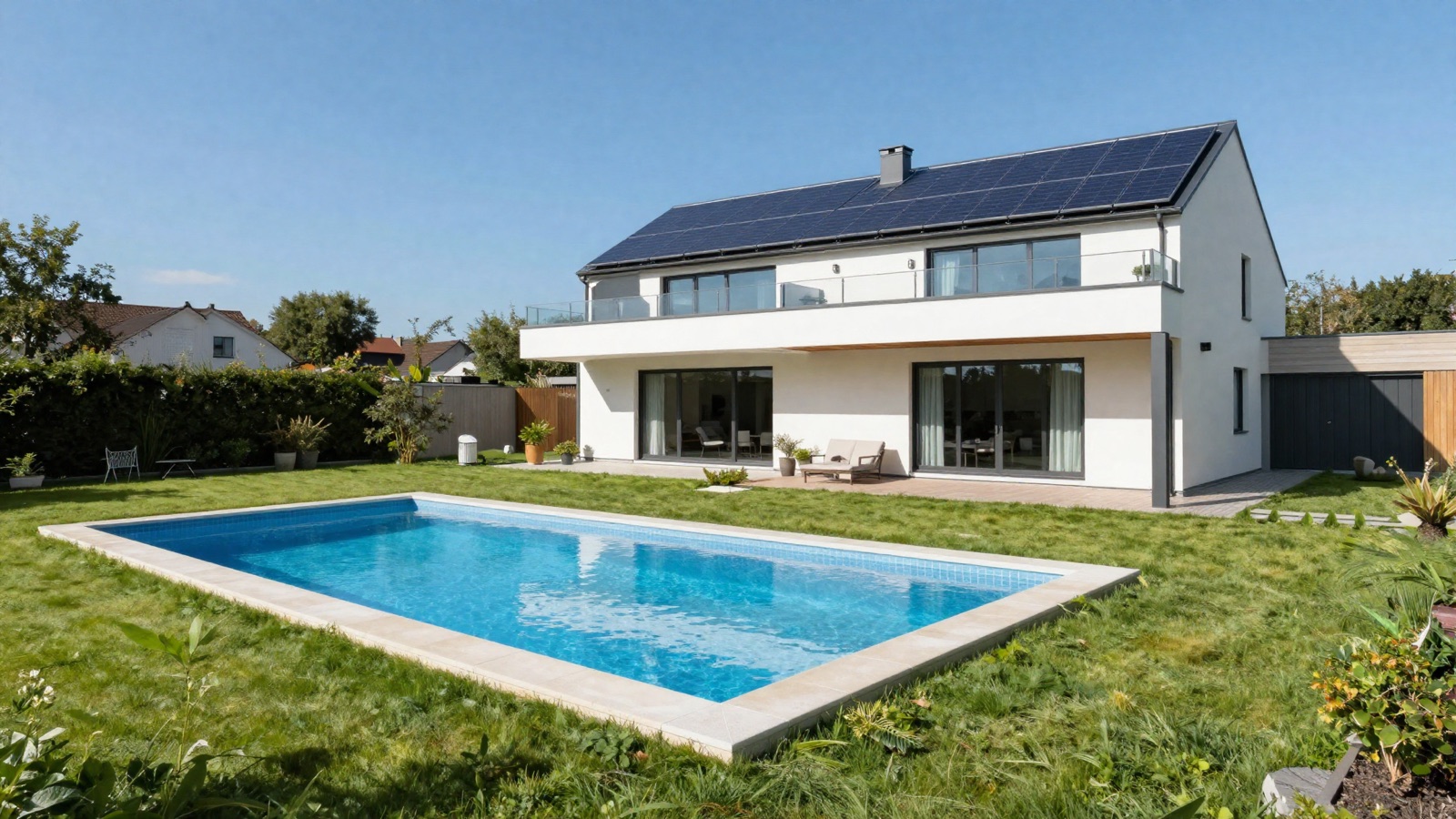
Adam, the owner of a detached house near Kraków, asked us a simple question: what pays off more - switching tariff or a home battery? To answer it properly, we didn't guess. We took his real data from a full billing year and calculated every scenario on the very same numbers.
This house has a profile that is becoming ever more common in Poland:
- ~33 MWh of annual consumption - a lot, because the heating is electric (a heat pump). In winter, consumption is 3-4× higher than in summer.
- ~14 kWp of PV (~14 MWh of production per year), settled under net metering with a 0.8 coefficient.
- Flat G11 tariff, no energy storage.
How we calculated it
The basis of the analysis was 12 months of real data - about 35,000 measurements in 15-minute windows, from the meter and from the PV inverter. On that data, the EnergyPal AI engine reconstructed, hour by hour, how the battery would work in each scenario and what the settlement with the grid would look like. This is not a back-of-the-envelope forecast - it is calculated on real data, in five variants:
- G11 - flat tariff (the reference point, status quo).
- G13 - time-of-use tariff (cheaper power off-peak), no battery.
- Dynamic - hourly market price (SPOT), no battery.
- Dynamic + 30 kWh / 15 kW battery - the recommended variant.
- Dynamic + 50 kWh / 25 kW battery.
All amounts in this article are the cost of energy plus the variable distribution charge (about 0.29 zł per kWh taken from the grid). This component cannot be skipped, because the scenarios differ in how it is billed: under net metering it is charged on the consumption after netting (~21,700 kWh here), while on a dynamic tariff with net billing it is charged on the full grid import (here 23-27 thousand kWh, depending on the scenario). Fixed charges (capacity, standing, subscription fees) are the same in every scenario, so we leave them out.
Five scenarios side by side
Each bar is a calculated annual cost of energy and variable distribution - and one result stands out immediately: switching to a dynamic tariff without a battery is more expensive than doing nothing.
| Scenario | Cost / year | Δ vs G11 | Investment (CAPEX) | Net metering 0.8 |
|---|---|---|---|---|
| G11 - status quo | 21 992 zł | - | - | kept |
| Dynamic - no storage | 22 337 zł | +345 zł (+1.6%) | - | lost |
| G13 - time-of-use | 19 219 zł | -2773 zł (-12.6%) | - | kept |
| Dynamic + 30 kWh storage | 17 500 zł | -4492 zł (-20.4%) | 44 000 zł | lost |
| Dynamic + 50 kWh storage | 16 291 zł | -5701 zł (-25.9%) | 59 000 zł | lost |
The best economic choice is a 30 kWh battery: payback in 9.8 years and 67 380 zł in lower bills over 15 years. The jump from 30 to 50 kWh (an extra 15 000 zł) buys only 1209 zł of additional savings per year and pays back in 12.41 years - we do not recommend the upgrade.
The battery nearly zeroes the bills in summer
The annual total is not everything - the rhythm matters too. In summer, with a battery on a dynamic tariff the full bill drops close to zero (with 50 kWh, June even ends in profit). In winter, when PV produces very little, all scenarios are expensive, and the cheap off-peak zone of the G13 tariff holds up best.
In summer (June-August), the whole season with a 30 kWh battery costs about 443 zł, and with 50 kWh about 99 zł - whereas staying on G11 costs over 2200 zł (G13 about 1300 zł). In winter (November-February) the battery loses its edge: little sun and flat market prices mean the battery scenarios even come out slightly more expensive than G11 - the annual result is made from spring to autumn.
How the battery works: own energy first
A battery on a dynamic tariff has two jobs: shifting its own PV production to the evening, and price arbitrage - buying cheap grid power and using or selling it when it is expensive. There is a catch with the second job: every kWh taken from the grid carries the variable distribution charge regardless of the market price. Arbitrage therefore only pays off when the price spread beats that fee. The result: the battery charges 75% from its own PV, and buying from the grid happens mainly in winter, at the deepest price valleys.
On average 0.52 cycles per day. Most of the work happens in spring and summer, when there is PV production to shift.
On average 0.4 cycles per day - the larger capacity is clearly less utilised.
A larger capacity does not change the amount of energy from the panels (they produce the same), and grid arbitrage is limited by the distribution fee. Sales from the battery to the grid remain a margin of its operation, not its foundation:
The 50 kWh battery does sell about twice as much to the grid as the 30 kWh one - but these are small volumes (785 vs 1,613 kWh per year). The extra capacity only catches the deepest price valleys, which is why the 15 000 zł upgrade brings just 1209 zł a year.
Where the house gets its power
Every kilowatt-hour used in the house comes from one of three sources: directly from the panels, from the battery, or from the grid. A larger battery slightly increases grid independence (from 34% to 36%) - the main value is shifting own PV production to the evening, not trading with the grid.
When the battery pays off
The battery lines start from the investment outlay and rise more slowly than the cost on the G11 tariff. The point where they cross the G11 line is the payback moment.
The lines include the battery outlay - the crossing point with G11 is the payback moment. "Bill savings" in the table below is the bill reduction alone, before deducting the outlay.
| Item | 30 kWh storage | 50 kWh storage |
|---|---|---|
| Investment (CAPEX, net) | 44 000 zł | 59 000 zł |
| Annual savings vs G11 | 4492 zł | 5701 zł |
| Simple payback | 9.8 years | 10.35 years |
| Bill savings over 15 years | 67 380 zł | 85 515 zł |
| Payback of the 30 → 50 kWh upgrade alone | - | 12.41 years |
We also checked what happens if market prices move by ±15%. On a dynamic tariff this house is a net importer, so cheaper market prices help and dearer ones hurt: with a 15% price drop the 30 kWh payback shortens to about 7.4 years, with a 15% rise it stretches to about 14 years. The G11 and G13 tariffs are regulated, so they are insensitive to market prices.
We have collected the requirements that Poland's PME 2 subsidy sets for an energy management system (EMS), quoted from the operator's documents, on a separate page: Home battery subsidy in Poland: what the PME 2 programme requires of an EMS.
Risks and honest caveats
A good analysis shows not only when the recommendation works, but also when it stops working. Here are the conditions that can change the maths:
We calculated all savings at market prices. If the government price freeze is extended and covers all consumption, the full bill on the G11 tariff drops to about 17 320 zł per year. The 30 kWh battery then stops saving anything, and the 50 kWh one saves barely 1029 zł a year - the investment loses its economic sense for as long as the freeze lasts. This is a political factor beyond our control - which is why we say it plainly.
Switching to a dynamic tariff means the irreversible loss of the favourable net metering 0.8 settlement. That is why switching to a dynamic tariff without a battery is a plain loss - on this house it costs about 345 zł more per year than staying on G11, because the distribution charge on the full grid import eats up the gain from market prices.
On top of this come the usual variables: the supplier's margin on the dynamic tariff and the export settlement terms. We accounted for all of them in the simulation on real data, but they may change in the future.
Conclusions
- Have the capital and a long horizon? The 30 kWh battery - the best payback; the modular design lets you add capacity later if your consumption grows.
- Don't want the capital outlay? The time-of-use G13 tariff gives -12.6% and keeps net metering - with no CAPEX at all.
- Considering only a switch to a dynamic tariff? Without a battery it is a plain loss on this profile - don't do it.
Every house is different - the outcome depends on the consumption profile, the size of the PV installation and local conditions. This case study shows, however, that with a large "winter" load and sizeable PV, an AI-controlled energy storage can genuinely change the bill - provided we calculate it on real data and on the full bill, not on promises.
